
Whoosh Effect Weight Loss: Myth, Water, and What Actually Helps
What People Mean By “Whoosh”
The “whoosh effect” is internet shorthand for a sudden drop on the scale after days or weeks of nothing. Some say fat cells empty, fill with water, wobble, then “flush”. It’s a neat story. It’s also not supported by solid research. Reputable round-ups say there’s no proof that fat cells routinely fill with water and then all drain at once. Sudden changes are more likely shifts in body water, not chunks of fat vanishing overnight.
What the Science Actually Says
When you lose body fat, the carbon leaves mostly through your lungs as carbon dioxide. That’s the biochemistry. You breathe out the mass; a smaller part becomes water. Cells do not need to become water balloons first. The fat stores shrink as energy is used. Honestly, it’s less dramatic than social media makes it sound.
Water, however, is dramatic. Carbohydrates are stored as glycogen, and each gram of glycogen is bound to around three grams of water. Change your carb intake and training, and you change glycogen – the water follows. That can swing scale weight by a kilo or two in days without any new fat gain or loss.
Why Big “Drops” Happen
Two common reasons:
- Glycogen shifts. Cut carbs hard and you shed glycogen and its water. Reintroduce carbs and the stores refill with water. The scale moves both ways.
- Fluid balance. Dehydration, salt swings, menstruation, poor sleep, tough training — all change water retention. Fix the trigger and you “whoosh”. It looks like fast loss. It wasn’t fat.
Low-carb and keto diets often show a fast first week for exactly this reason: water. That visible early change keeps the myth alive. It feels like magic. It’s physiology.
Keto, Whooshes, and Caution
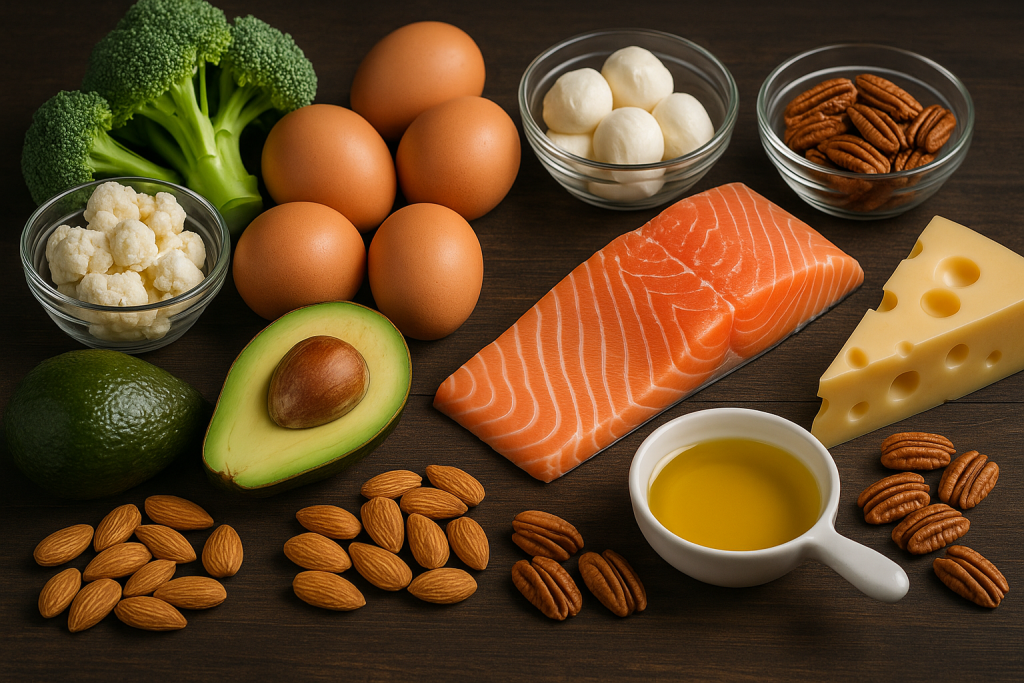
Keto swaps your main fuel from glucose to ketones. Clinically, versions of the diet are used for epilepsy under specialist care. For general weight loss, major UK charities and dietetic bodies are cautious: evidence is mixed, long-term data are limited, and the diet can be high in saturated fat with practical risks if you go it alone. If you choose keto, do it for reasons beyond chasing a whoosh.
Plateaus Are Normal – and Often Not Real
Weight loss is noisy. You may be losing fat while water masks it. Or you might simply be at maintenance for a few days. That’s not failure; it’s the process. Weekly averages tell the truth better than one morning’s number.
Track smarter:
- Use weekly mean weight plus waist measurement.
- Weigh at the same time under similar conditions.
- Watch four-week trends, not single points.
Can You “Trigger” a Whoosh?
There’s no magic button. But a few levers affect the reasons whooshes appear.
- Consistency. Keep your calorie deficit steady. Fat loss continues even when scales stall. The drop often comes later.
- Refeeds. Short, planned higher-carb days can lift leptin and shift water. Some research shows carb overfeeding bumps leptin for a day or two. It’s not guaranteed fat loss — but it can improve adherence and reduce water retention for some.
- Sleep and stress. Poor sleep and high stress skew appetite and fluid balance. Get enough sleep and the body often lets go of water. Possibly the most underrated tactic.
- Hydration and salt. Being well-hydrated helps normalise fluid balance. Big swings in salt lead to big swings on the scale.
What the Whoosh Effect Isn’t
Let’s be blunt.
- It isn’t proof you lost five pounds of fat overnight.
- It isn’t something you can force every week.
- It isn’t a sign your plan only works in bursts.
Chasing sudden drops is a distraction. Chase habits.
A Better Way to Measure Progress
Scales are useful — not sacred. Keep them in context.
Non-scale checks that matter:
- Clothes fit at the waist and hips.
- Progress photos under the same light.
- Performance — steps, lifts, runs.
- Energy and sleep — real life markers of recovery.
If two out of four are improving, you’re winning even if the scale sulks.
If You Like Low-Carb – or Don’t
You don’t need keto to lose fat. You need a way to eat fewer calories than you use – without hating your life. Some prefer low-carb; others do well with balanced carbs and fibre. UK dietitians note low-carb can work short term, but it isn’t inherently superior to other calorie-controlled approaches. Pick the pattern you’ll keep when motivation dips.
Practical Steps That Beat Myths
Here’s the plan I’d give a friend.
Food:
- Anchor meals with protein and veg; add carbs to match activity.
- Keep ultra-processed snacks for planned moments.
- Eat slower – your hormones need time to talk to your brain.
Activity:
- Aim for 150 minutes moderate aerobic work per week, minimum.
- Add two strength sessions to keep muscle while you diet.
- Walk after meals. It helps glucose control and mood.
None of that looks exciting. It works. Most “whooshes” arrive when you do the basics long enough.

My Take – Honestly
The whoosh effect is a tidy label for messy biology. Water moves. Glycogen swings. Fat loss is steady but hard to see day to day. If a sudden drop shows up, enjoy it – then get back to the plan. If it doesn’t, keep going anyway. Your body is changing even when the mirror is slow to report.
If you’re stuck for weeks, audit the big rocks: calories, protein, steps, sleep. Talk to a clinician if you’re considering restrictive diets, especially if you have medical conditions. Use science to guide you — not folklore to comfort you.
Bottom Line
Whooshes happen – mostly as water shifts. Fat loss happens – mostly as carbon you breathe out. Don’t confuse the two. Build boring, repeatable habits and let time do the heavy lifting. When the whoosh comes, you’ll know what it is, and you won’t rely on it.
Andy Fordham’s Weight Loss: The Viking’s Fight To Change
In the world of darts, one name stands out for more than his aiming skill or crowd-pleasing walk-on. Andy Fordham – nicknamed “The Viking” – earned his place in history. But his story is also a cautionary tale about health, excess and the price of success.
Early Successes and Rising Weight
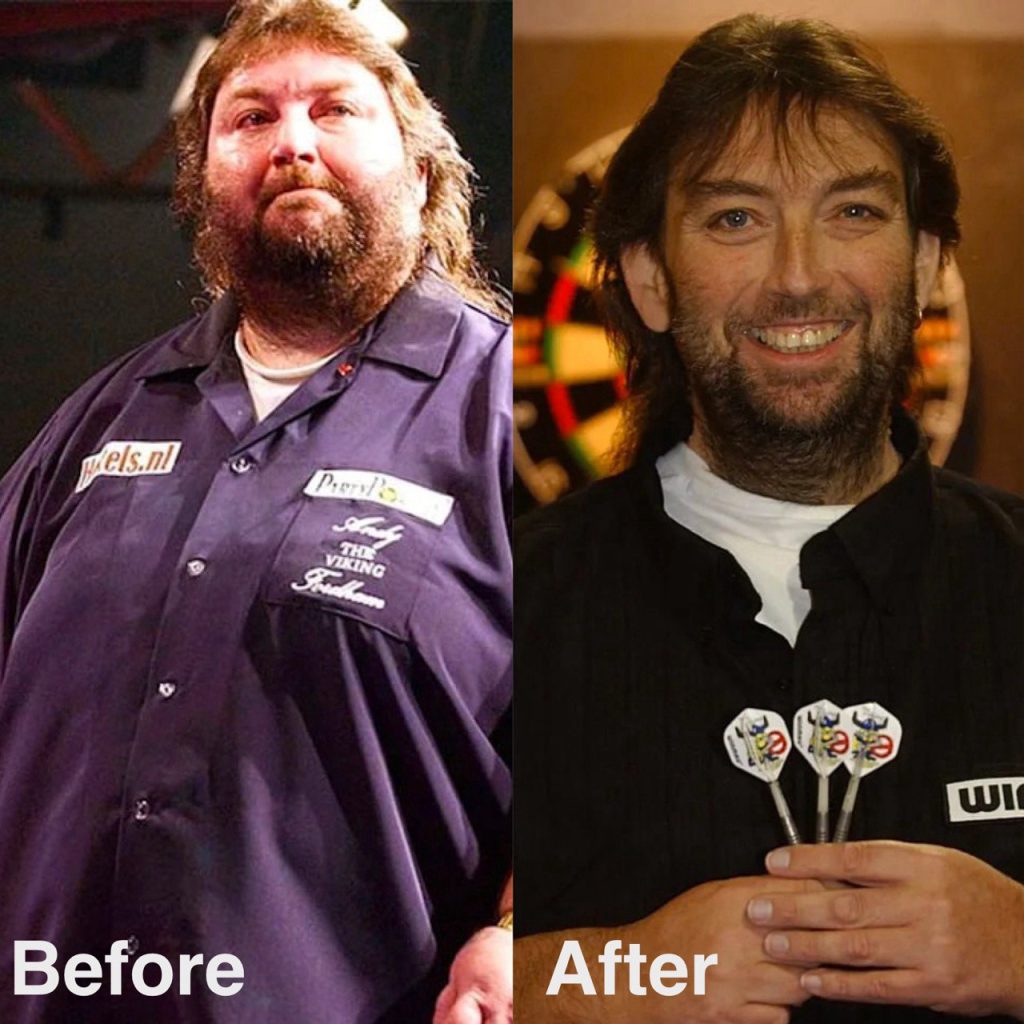
Fordham came into prominence by winning the BDO World Darts Championship in 2004. At that point he weighed over 30 stone (roughly 190 kg). His appearance was imposing – long hair, big beard, large build – yet his nature was described as gentle and popular among fans and fellow players.
He admitted that his lifestyle was unhealthy: heavy drinking, takeaway food, little exercise. “On an average day I’d have up to 25 bottles of lager and half a bottle of spirits… I’d be eating badly, with take-aways and kebabs and doing no exercise.”
That combination – championship fame plus neglect of health – set the stage for what came next.
The Wake-Up Call
Fordham’s body began to speak to him. In a high-profile match against Phil Taylor in November 2004, the intensity of the lights and heat on stage contributed to him collapsing. He was forced to retire from the match.
Doctors then told him he faced real risk unless he changed. It was a blunt message. He could no longer ignore his health. He admitted he might have died if he kept going.
So, he made a decision.
The Weight Loss Effort
Fordham entered the TV programme Celebrity Fit Club. He referred to it as something he “didn’t really want to know, but … I had no choice but to do it, I would have died otherwise.”
In early 2006 he publicly noted he had lost three stone and felt noticeably better. “If I take a taxi from the pub, I’m not out of breath by the time I get into it,” he said.
By then he had cut his drinking significantly and changed diet, though he admitted the pub environment made it “hard”.
His effort is commendable. He:
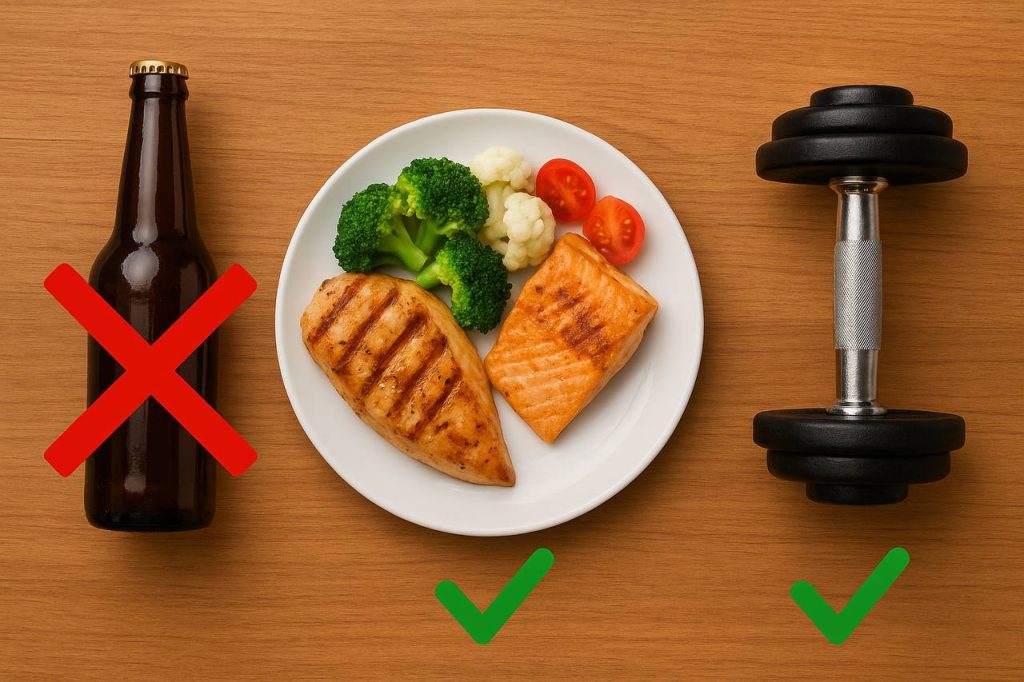
- cut down alcohol drastically
- improved diet (fish, chicken, grilled items instead of take-away)
- introduced exercise such as swimming into his routine
This shows that even with a heavy build and long-term habits, change was possible – though it cost discomfort and honesty.
The Reality of Setbacks
Yet, the story did not conclude with a neat victory. Fordham later admitted that although he had got the weight down, he put a lot of it back on. In an interview he claimed he once dropped to about 16 stone after his 2007 health crisis – but then returned to about 24 stone.
In his own words: “I’ve been off the sauce for about ten years now … one doctor told me I could probably have a drink here and there but I’m one of those people who will have a couple, think it’s OK then get stupid again.”
It is perhaps uncomfortable to admit: severe change is possible, but maintaining it is often harder than the initial transformation. Fordham’s health continued to battle him – fluid in his lungs, liver damage, collapsed first-round match at world championships in 2007.
Thus his journey shows the double edge: you can climb, but the fall remains possible.
What We Can Learn – Honestly
From Fordham’s case we can draw some direct lessons. They may sound blunt – and yes, possibly uncomfortable, but they are worth stating.
- Success and excess often travel together. When Fordham won the world title, his lifestyle of alcohol and comfort followed. The limelight provided free drinks, invites, distractions. He admitted: “Maybe it was one of the worst things that could have happened to me, becoming world champion.”
- The wake-up isn’t optional. Medical warning after medical warning. Without the collapse, it is likely he would have eventually succumbed. His quote: “I watched myself growing fat in the mirror… but it was over time and I didn’t realise.”
- Losing weight is not the same as solving the root. The initial weight loss was impressive, but habits – both physical and mental – remained. As Fordham said, he is “one of those people who will have a couple, think it’s OK then get stupid again.”
- Maintenance is harder than change. He achieved big reductions but struggled to keep them off. His later weight again rose; health issues continued. It is a sober reminder: transformation is not a one-off event.
- Support and setting matter. Fordham owned a pub. He worked in an environment surrounded by alcohol and tempting food. This context made his effort more difficult. If one’s surroundings stay the same, change becomes harder.
Why This Story Matters
You might ask: why pay attention to a darts star’s weight loss journey? Because it reflects universal themes. Fame, indulgence, denial, crisis, change. Many of us may not be world champions—but many of us know the lure of comfort, the blindness to creeping weight, the need for a serious wake-up call. Fordham’s story is not just about darts. It is about us.
It is also a reminder that no one is exempt. Even someone at the top of their game, beloved by fans, can reach a point where the body demands attention. He showed humility — admitting mistakes, changing lifestyle, facing collapse. He also showed the fragility of change when the environment and mindset remain unchanged.
Final Thoughts
In the end, the weight-loss journey of Andy Fordham is neither a fairy-tale nor a cautionary tale only. It is both. It is gritty. It is real. He achieved remarkable change. He faced serious decline. He kept fighting. He sometimes failed. But he lived the truth of his choices.
If you read this and feel some discomfort – good. Change often begins with discomfort. If you feel hope – that’s valid too. Because the man known as “The Viking” showed the possibility of turning around. And he also showed that the mirror doesn’t lie – until we start listening.
Perhaps you will walk away with a question: What am I ignoring? What is creeping up slowly? What wake-up call might I need to heed?
Andy Fordham’s legacy on weight and health is messy. It is inspiring. It is sobering. It is real. And maybe, if you are honest with yourself, it might nudge you to look at your own odyssey.
Jimmy’s Satay Sauce Recipe – the 10-Minute Fakeaway You’ll Actually Use
You’ve seen the jar on Asian shop shelves and TikTok reels. Jimmy’s Saté (Satay) Sauce is the not-so-secret shortcut many UK takeaways use for that nutty, savoury, slightly sweet sauce. The roots are Southeast Asian – Indonesia, Malaysia, Singapore – but the jar most of us buy is made in Hong Kong, and it’s become a backbone for Chinese-takeaway-style satay here. Honestly, that mix of traditions is why it’s so versatile.


What Jimmy’s Saté Sauce Actually Is
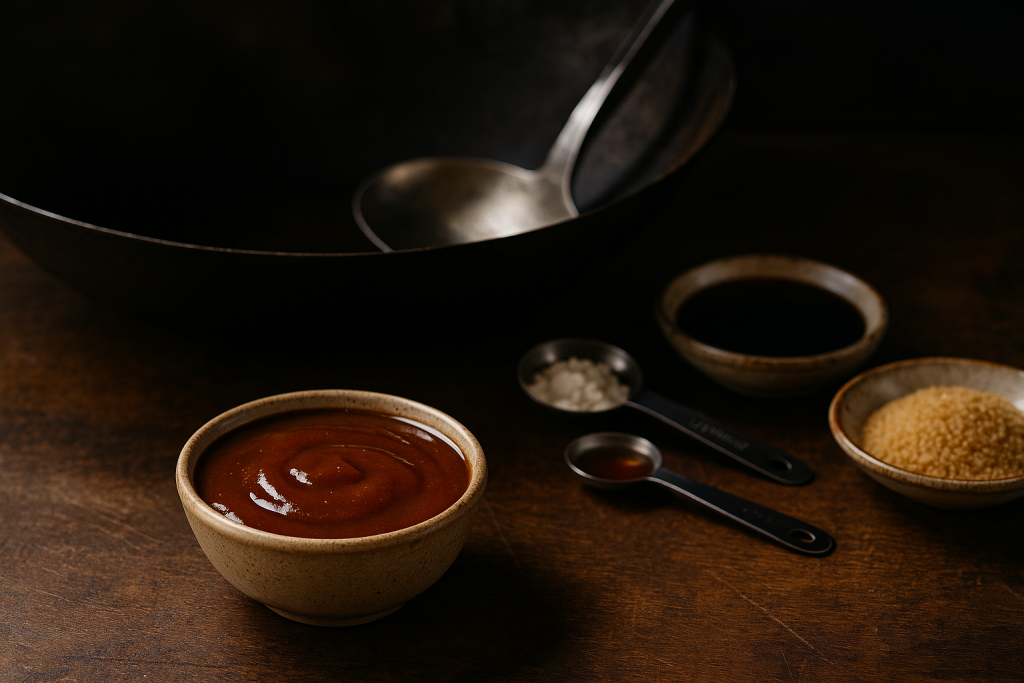
Jimmy’s is a cooked paste of rapeseed oil, peanuts (about 19%), soy sauce, sugar, spring onion, garlic, shrimp, curry powder and chilli. In plain English – fat for body, peanuts for flavour, soy for salt, aromatics for depth, spices for warmth. It’s punchy straight from the jar, which is why a little goes a long way. Allergy heads-up: it contains peanuts, soy, wheat and crustaceans. Possibly not the sauce to wing without reading the label.
Two Legit Styles (Pick Your Lane)
Here’s where opinions split, and I won’t hedge.
- Coconut-forward satay (Singapore/Malaysia style): smooth, a bit richer. Many home cooks add coconut milk and even extra crushed peanuts. Jimmy’s own UK site shares a version like this.
- Cantonese takeaway saté: leaner, more soy-savory, no peanut butter or coconut. That’s the style some Hong Kong cooks insist on. Both are good; they’re just different.
Core Pantry Recipe (Coconut Route)
This makes about 500 g of pourable sauce – enough for noodles for four, or dipping for a tray of skewers.
- 75 g Jimmy’s Saté Sauce
- 150 ml water
- 100 g crushed salted peanuts (optional but lovely)
- 100 ml coconut milk
- 25 g brown sugar
Method:
Whisk paste and water in a small pan. Add peanuts, coconut milk and sugar. Simmer 3–5 minutes until slightly thick. Thin with water if needed. Taste – you may want a pinch of salt or a squeeze of lime. That’s it. Honestly, it’s harder to overthink than to cook.
Cantonese Takeaway Style (No Coconut)
When you want that glossy, savoury saté that clings to beef or chicken in a wok:
- 2 heaped tbsp Jimmy’s Saté Sauce
- 150 ml hot water or chicken stock
- 1 tsp light soy
- ½ tsp sugar (taste first; the jar is sweet already)
- 1 tsp cornflour mixed with 1 tbsp water (optional, for extra cling)
Method:
Stir paste with hot water/stock until smooth. Add soy and sugar. Bring to a simmer 1–2 minutes. If you like it thicker, add the cornflour slurry and bubble 30 seconds. Use straight away in a stir-fry or as a drizzle. (Purists will cheer – no coconut, no extra peanut).
How to Use It – Three Fast Wins
- Chicken skewer dip: Grill or air-fry skewers, warm the coconut-route sauce and finish with chopped coriander and peanuts.
- 15-minute noodle toss: Stir-fry veg and leftover meat, add the no-coconut sauce, toss with cooked noodles, splash of sesame oil.
- Satay fried rice: A spoon of Jimmy’s into your usual egg fried rice is outrageously good for the effort. Possibly addictive.
My Straight Talk on Tweaks
- Peanut butter: If you want thicker, add a spoon. If you’re chasing Cantonese takeaway notes, skip it. Both paths have fans.
- Coconut milk: Great for the Southeast Asian lane; unnecessary for the Cantonese one. Use less than you think – it can drown the aromatics.
- Soy + lime: A dash of soy sharpens salt; a squeeze of lime lifts the finish.
- Heat: Jimmy’s has mild warmth. For kick, stir in chilli oil at the end.
Ingredient and Origin Notes (So You Can Shop Smart)
Multiple UK retailers list near-identical labels: rapeseed oil, peanuts 19%, soy sauce, sugar, spring onion, garlic, shrimp, curry powder, chilli. That shrimp is why vegans will need another brand or a homemade satay. Origin is Hong Kong production, though the recipe story nods to Malaysia. Check jars for current allergen wording.
Stir-Fry Timing – Avoid the Split
Satay sauces can split if hammered on high heat. Solution is simple:
- Cook protein and veg first.
- Add sauce at the end over medium heat.
- Toss just until glossy and hot, then off the heat.
If it still looks oily, whisk in a splash of hot water. Don’t panic – emulsions are fickle; water brings them back together.
Make-Ahead, Storage, Safety
Unopened jars are ambient. Once opened, keep refrigerated and use within about a month. If you’ve made a batch of finished sauce, it will hold 3–4 days in the fridge. Reheat gently with a spoon of water. Don’t let it boil hard – you’ll split the fat.
Troubleshooting – Quick Table
| Problem | Likely cause | Fix |
| Too thick | Simmered too long | Loosen with hot water or stock. |
| Too sweet | The jar carries sugar | Add soy, lime, or a pinch of salt. |
| Oily split | Heat too high | Whisk in hot water off the heat. |
| Flavour dull | Coconut masked it | Reduce coconut next time; add a touch of soy. |
If You Want to Go Deeper
Sous Chef’s overview is handy if you’re new to Jimmy’s – quick background and serving ideas. It’s not gospel, but it tracks with how UK cooks use it at home. The brand’s own pages cover history and the Hong Kong production line, which clears up the “Is it Malaysian or Chinese?” confusion. The short answer is both – by recipe roots and by manufacturing.
Final Word
Jimmy’s isn’t a museum piece. It’s weeknight cooking that tastes like you tried harder than you did. Pick a lane – coconut-smooth or Cantonese-savory – and commit. Keep the heat moderate, taste as you go, and don’t be shy with water to adjust consistency. Honestly, that’s the whole trick. The jar does the heavy lifting; you just steer.
Macaroons Recipe by Mary Berry – Almond Biscuits With Snap and Chew
Why This Recipe Works
Mary Berry’s almond macaroons are old-school British baking – quick to mix, easy to portion, and they set with a glossy crackle. No fancy kit. No syrup stages. You whisk egg whites, fold in ground almonds and sugar, then bake on rice paper or baking parchment. Some editions include a spoon of semolina or ground rice for extra bite – a very Mary touch.
And yes, these are macaroons, not macarons. Different bakes. Macaroons are rustic almond (often coconut) drops. Macarons are the smooth French sandwich shells. If you’ve mixed them up before, you’re in a very large club.

Ingredients – and Why They Matter
- 2 large egg whites, room temperature – lift and structure when whipped.
- 175g caster sugar – dissolves fast, helps the shell set.
- 100g ground almonds (very fine) – the crumb and flavour.
- 25–30g semolina or ground rice (optional, Mary-style) – light crunch, better chew.
- A few drops almond extract (optional) – go easy; it’s strong.
- 8 blanched almonds, halved – the classic garnish.
- Rice paper or baking parchment – for easy release; rice paper gives that bakery look.
Note on sources: multiple cook-throughs of Mary Berry’s “Baking Bible” list the same core formula – egg white, caster sugar, ground almonds, plus a little semolina/ground rice. That’s the pattern we’re following here.

Step-by-Step Method
- Heat the oven to 150–160°C (130–140°C fan). Line two baking trays with rice paper or non-stick parchment. If using rice paper, trim later around each biscuit.
- Whisk the whites to soft peaks – they should hold lines but still flop a little. Stiff peaks make the mix dry and the biscuits tough.
- Fold in the caster sugar, ground almonds, and (if using) semolina/ground rice. Add a drop or two of almond extract. The mixture will be sticky and spoonable.
- Dab and top: Spoon heaped teaspoons onto the trays, spacing well. Press a halved almond into each. Lightly brush tops with a touch of leftover egg white for sheen – not a bath, just a glaze.
- Bake for 20–25 minutes until light gold at the edges. They will feel soft straight out of the oven; they firm as they cool.
- Cool and lift: Leave 5 minutes, then move to a rack. If you used rice paper, snip around each biscuit once cool.
Honestly, that’s it. No piping needed unless you fancy it.

Why These Moves Matter
- Soft peaks keep moisture in – crucial for chew. Under-whipped whites give puddles; over-whipped whites collapse.
- Fine almonds beat coarse meal. Large bits make the texture gritty and the domes crack too hard.
- Semolina/ground rice is optional but clever – the bite is better, and several Mary-derived bakes use it.
- Rice paper vs parchment: rice paper is traditional for macaroons and avoids sticking; parchment is fine if it’s truly non-stick.
Make It Yours (Without Wrecking the Structure)
- Cherry-topped: swap the almond halves for glacé cherries – very bakery-counter.
- Chocolate-dipped: once cool, dip bases in melted dark chocolate and set on parchment.
- Citrus hint: a small pinch of finely grated orange zest in the mix.
- Gluten-free as written: there’s no wheat flour; check your semolina/ground rice choice if you need to keep it GF.
Keep the ratios. Change the finishing notes, not the bones.
Troubleshooting – Quick Table
| Macaroons spread too much | Whites under-whipped or mixture too warm. Whisk to soft peaks; chill the bowl for 10 minutes if your kitchen is hot. |
| Tough, dry tops | Whites over-whipped or too much glaze. Aim for soft peaks; brush lightly. |
| Gritty texture | Coarse almonds. Use finely ground almonds (sometimes sold as almond flour). |
| Sticking | Tray not lined or parchment not non-stick. Use rice paper or quality parchment. |
Storage, Freezing, Serving
- Room temperature: airtight tin, up to 5 days.
- Fridge: they soften a touch; still fine within a week.
- Freezer: freeze in layers with parchment, up to 2 months. Thaw at room temperature – do not reheat or you’ll dry them out.
- Serve with: espresso, strong tea, or as a small sweet on a dessert plate.
A Word on Names – Macaroon vs Macaron
If someone asks for “Mary Berry macarons”, they mean the French sandwich shells. That’s another discipline – meringue, macaronage, resting, ruffled “feet”. These macaroons are the older almond (often coconut) cousins – simpler, faster, less fussy. Different treats. Both good. Just don’t cross the streams.
Why I Rate This Method
It’s the right kind of simple. No condensed milk. No whisking to marble-statue stiffness. The result is what you actually want – a thin crackle outside, soft almond middle, a clean top with a single nut. It’s also faithful to the British macaroon tradition you’ll see echoed across reliable cookbooks and cook-throughs of Mary’s bakes. Possibly not glamorous enough for social media. Definitely good enough for your biscuit tin.
Blackcurrant Jam, Delia-Style – a Straightforward Recipe That Sets Like a Dream
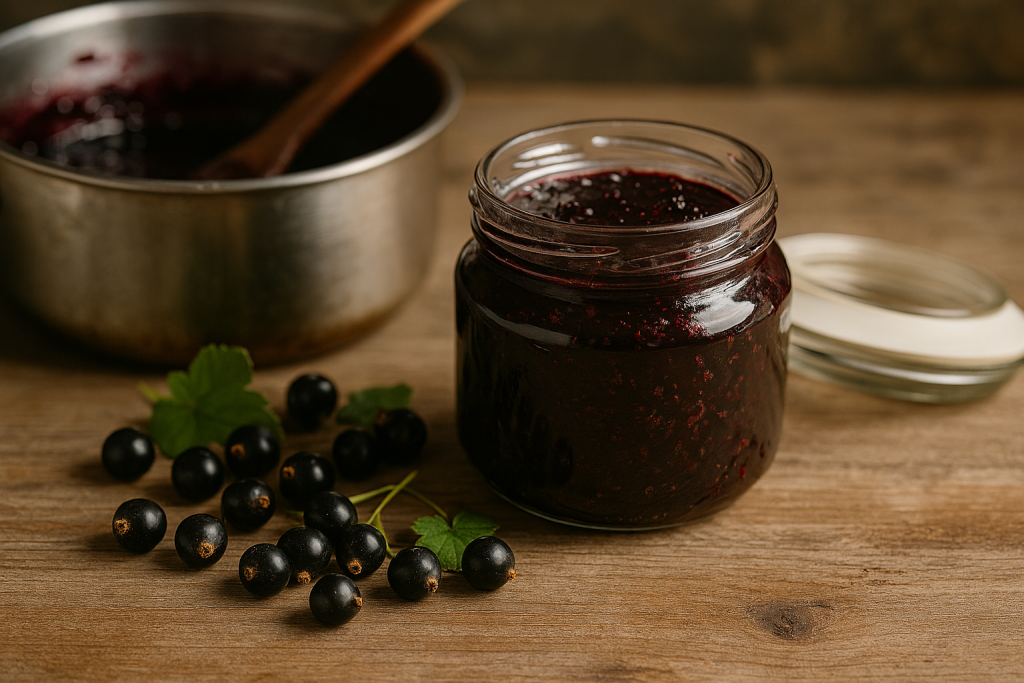
You want a pot of deep, tart jam that behaves. No faff. No added pectin. Delia’s approach is exactly that – fruit, water, sugar, heat, patience. Blackcurrants are naturally rich in pectin and acid, so the set comes from the fruit itself. That’s why this formula works so well.
Why This Method Works
Blackcurrants carry plenty of pectin – the stuff that makes jam gel – so you can use plain granulated sugar. Heat softens the skins and releases pectin; a hard boil drives off water and tips the mixture to setting point. It’s simple chemistry, not wizardry. If you need the comfort of numbers, jam sets around 105°C – or you can use the trusty cold-saucer test.
Ingredients (Small Batch)
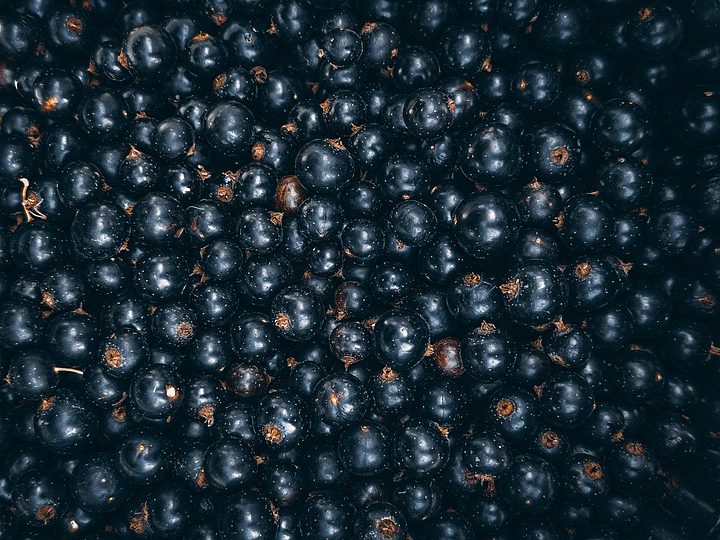
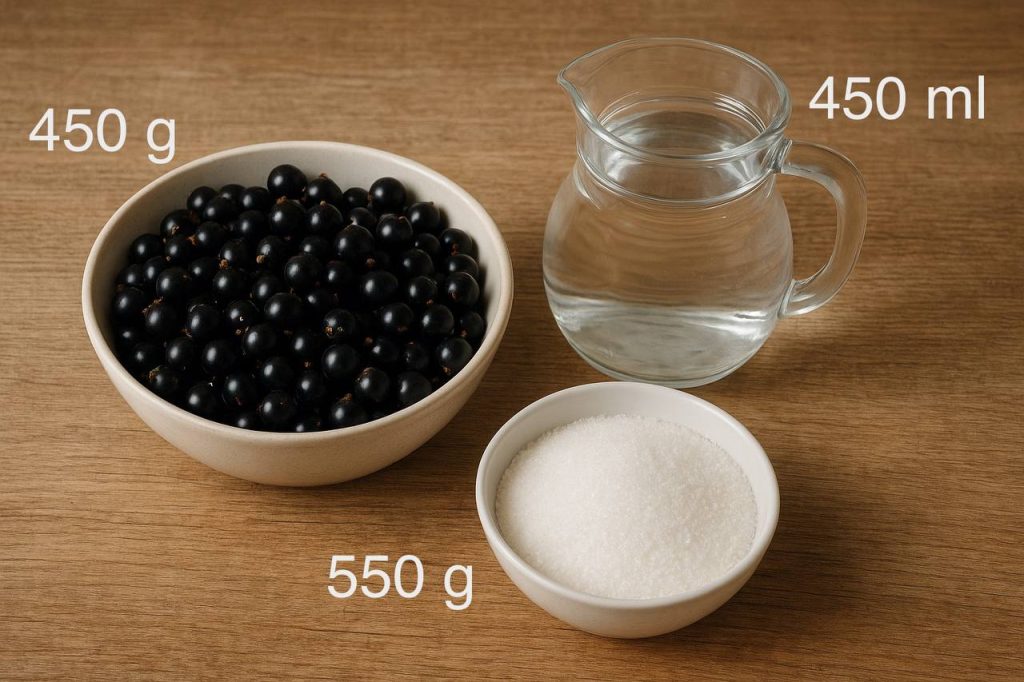
- 450g blackcurrants, stalks removed
- 450ml water
- 550g granulated sugar
Those amounts suit a standard pan and give a few neat jars. The ratio also plays nicely with the fruit’s natural pectin, so you get a firm, spreadable finish without jam sugar.
Equipment You’ll Need
- Large, heavy saucepan
- Wooden spoon
- A couple of clean saucers (for set testing)
- Warm, sterilised jars with lids
No preserving pan? You’ll be fine – just don’t fill your pot to the brim when it boils. For testing, the saucer method is old-school and reliable.
Step-by-Step: Delia-Style Blackcurrant Jam
- Soften the fruit
Rinse the blackcurrants and pull off any lingering stalks. Put fruit and water into the pan. Bring to a gentle simmer for about 10 minutes, until the skins are tender and the liquid turns inky. That’s your pectin release starting. - Dissolve the sugar
Stir in the sugar off the heat until no gritty crystals remain. Undissolved sugar is the road to crystals later – and nobody wants sandy jam. - Boil hard
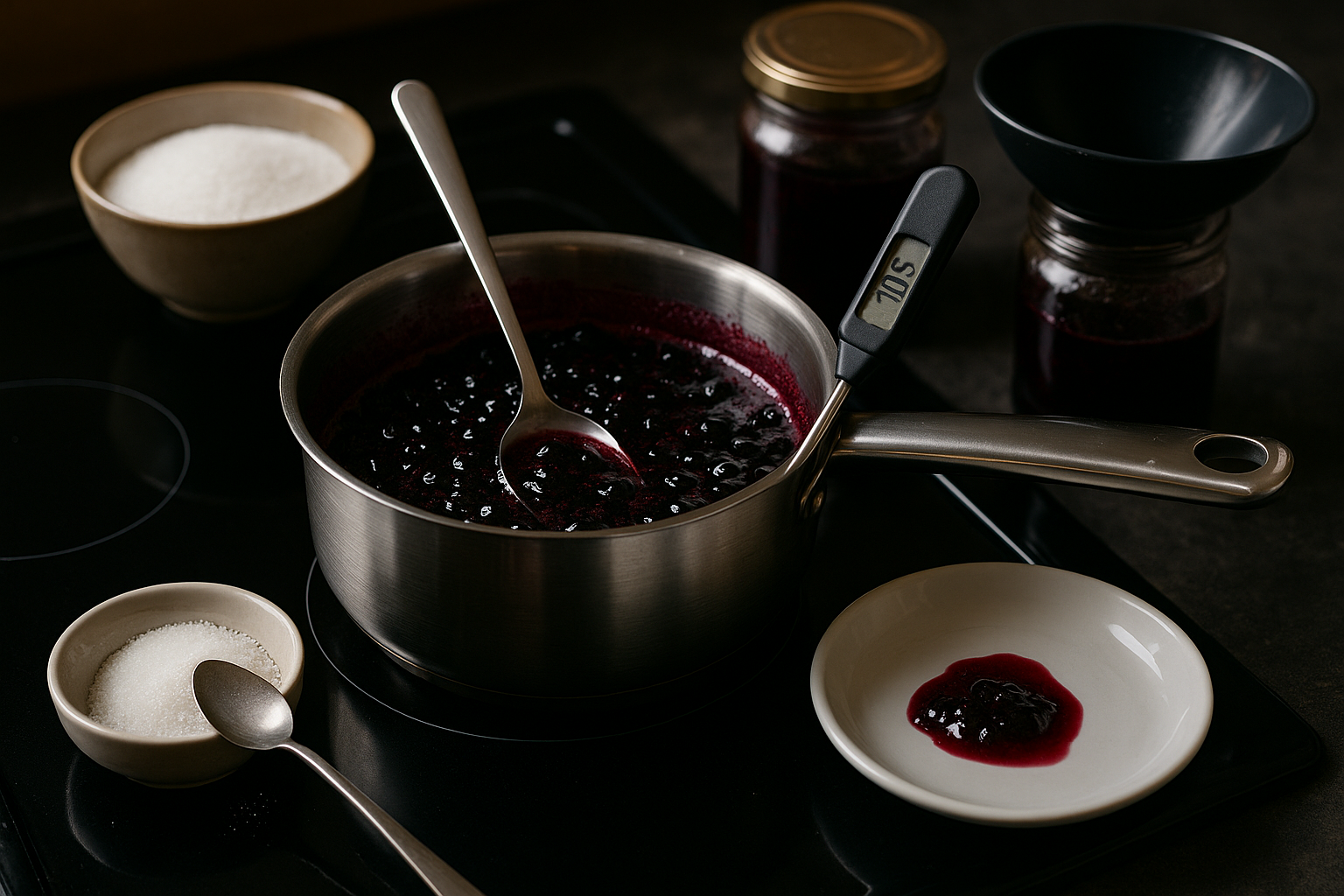
Return to the heat and boil vigorously for 10–15 minutes. Keep an eye out – a steady, rolling boil is the goal. - Test the set
Take the pan off the heat. Dot a spoonful on a chilled saucer, wait a few seconds, then push with your fingertip. If it wrinkles, you’re there. If not, boil for 2–3 minutes more and test again. Thermometer users can aim for 105°C, but the saucer tells the truth. - Pot and seal
Skim any froth if it bothers you, then ladle the hot jam into warm, sterilised jars. Seal at once. Stored cool and dark, properly sealed jars keep for months; once opened, treat it like any jam and refrigerate.
What to Expect
This style gives a bold, sharp jam with a clean set. Because blackcurrants are high-pectin fruit, you don’t need lemon juice or jam sugar to get a gel – normal sugar is fine. If you prefer a slightly softer, glossier finish, take it off the heat as soon as it passes the wrinkle test.
Common Pitfalls – and Quick Fixes
| Didn’t set | You probably stopped a touch early. Put it back on the heat and give it another hard 2–3 minute boil, then test again. The plate never lies. |
| Too stiff | It went a smidge too long. Next time, start testing at the 10-minute mark. |
| Crystals | Sugar wasn’t fully dissolved. Warm the fruit gently before the full boil and stir until it’s silky. |
| Cloudy jars | Skim froth or just ignore it. It’s harmless. |
| Bitter notes | Stalks slipped in. Be ruthless with prep; those little stems carry tannins. |
Make It Yours (Without Breaking the Set)
- Seed-light version – Briefly mash, then sieve the softened fruit for a jelly-style texture before adding sugar. Weigh the pulp and follow a sugar-to-pulp ratio close to 4:5 for a balanced set.
- Cassis twist – Stir a tablespoon of crème de cassis into the pan off the heat for a grown-up note.
- Herbal nudge – A few lavender buds or a strip of lemon zest can infuse during the boil; remove before potting. (Go light – blackcurrant is bossy).
How to Test for Set – Three Options
- Thermometer – 105°C is the classic jam point.
- Wrinkle test – The cold-plate method: wrinkle equals set.
- Flake test – Lift the spoon and watch for a sheet-like drop.
Use what you like – the goal is a gel that holds on toast and relaxes slightly in warm yoghurt.
Storage, Serving, and Small Batches
Blackcurrant jam is happy in a cool cupboard for several months if sealed well. Open jars live in the fridge. It freezes, too – leave headroom. Spoon it into porridge, ripple through Greek yoghurt, glaze a chocolate torte, or go classic with scones and clotted cream.
A Note on Sugar Ratios
Many jams use a 1:1 fruit-to-sugar ratio; blackcurrant’s natural pectin means you can edge lower if you prefer something less sweet, but sweetness helps both set and shelf-life. If you cut sugar, expect a softer set and shorter keeping time. Your call.
Why Blackcurrant Is So Forgiving
Beyond flavour, blackcurrants are a gift to preservers. Their naturally high pectin and acidity make jams and jellies that set readily – one reason they’ve been pantry favourites for generations. If you’re nervous about your first preserve, start here.
Madeleine Recipe Mary Berry – A No-Fuss Guide That Actually Works
Why Mary’s Version Delivers
Mary Berry’s French madeleines are simple on paper – and that’s the point. Her formula leans on self-raising flour with a little baking powder, plus melted butter, eggs, sugar and lemon zest. No genoise theatrics. No bain-marie. Just a quick batter that bakes into shells with a gentle hump when you handle it right.
Two moves matter. First, butter and flour the tray so the ridges release cleanly. Second, chill the batter, then bake hot. The chill helps hydration and slows spread; the heat kickstarts lift. That duo is your best shot at the classic rise.

Ingredients – and Why They’re There
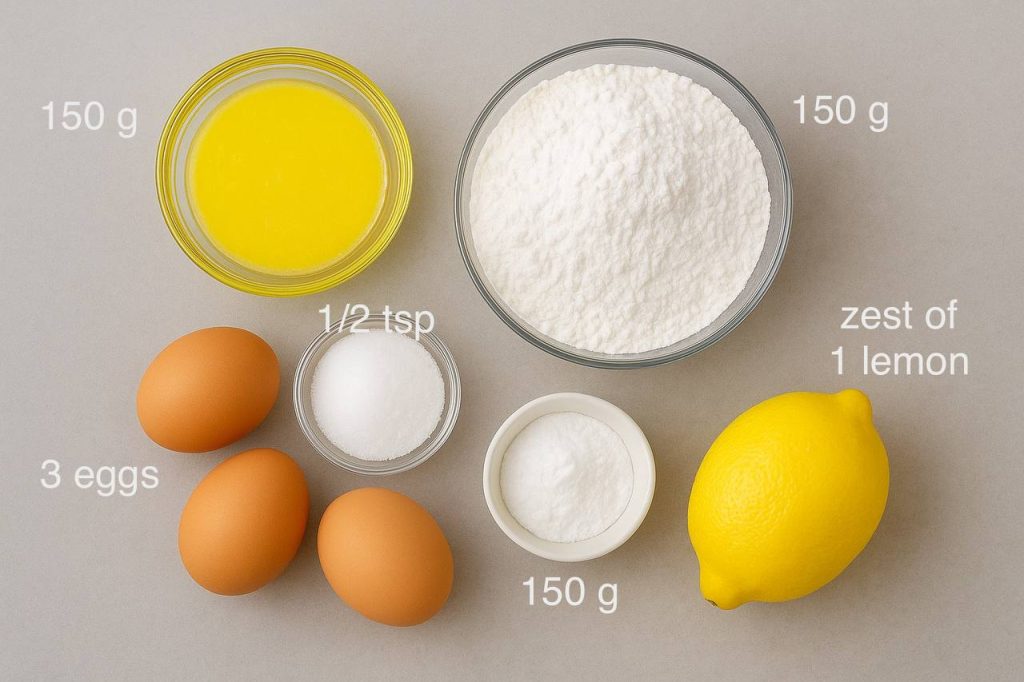
- 150g butter, melted and cooled – richness and the classic edge. Warm, not hot, or you’ll flatten the batter.
- 150g self-raising flour – built-in lift without faff.
- 150g caster sugar – fine enough to whip in easily.
- 3 eggs (room temperature) – structure and steam.
- ½ tsp baking powder – extra nudge for the hump.
- Finely grated zest of 1 lemon – brightness without sourness.
- Icing sugar, to dust (optional)
That list tracks with Mary’s “Baking Bible” – style madeleines as reproduced by cooks who’ve baked straight from the book. It’s a reliable map.
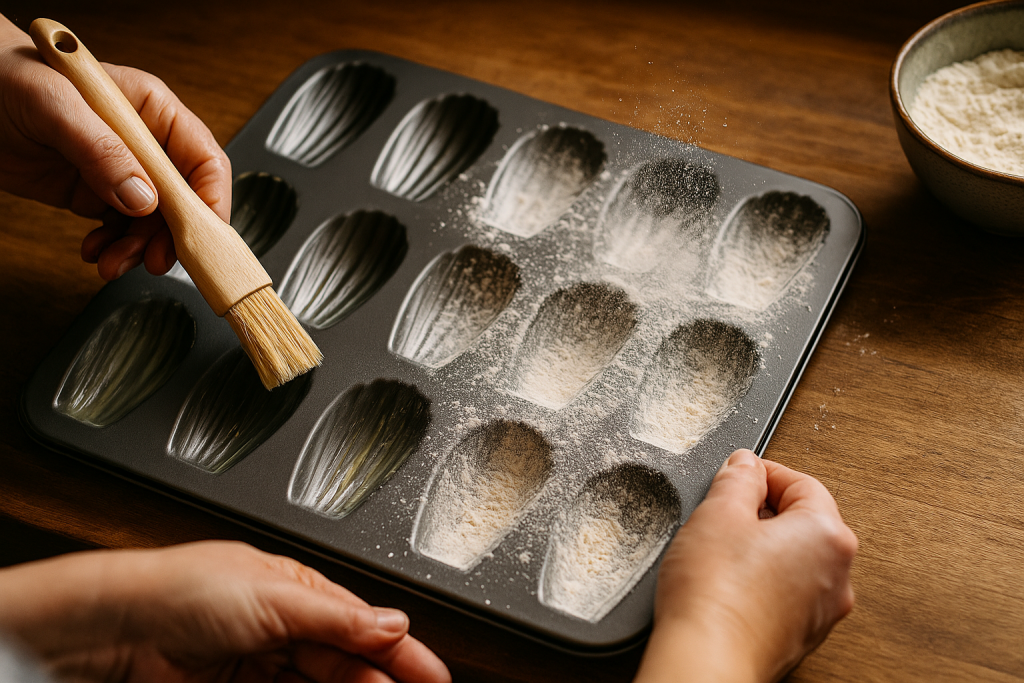
Pan Prep That Saves Your Shells
Brush the moulds with melted butter, then dust with flour and tap out the excess. It’s old-school and it works. Skipping this step is how you end up prising cakes out with a knife and crying into the crumbs. Mary’s method is clear on this part.
The Hump – What Really Causes It
Short version – cold batter, hot tin, hot oven. Chilling lets starch hydrate and firms the butter. When the batter hits heat, the outer sets while the centre expands and domes. Food-science explainers and pro bakers agree: the chill–then-blast approach gives you taller humps and crisper edges.
Step-By-Step – Mary’s Style, Streamlined
- Preheat to 200°C/180°C fan – hot, but not scorch-level. Grease and flour a 12-hole madeleine tray.
- Whisk eggs + sugar until pale and thick – a soft ribbon is enough.
- Fold in the flour, baking powder and lemon zest. Go gently – keep the air.
- Stream in butter around the bowl and fold until just combined.
- Chill 30–60 minutes. Longer is fine; overnight gives even cleaner edges. Don’t let the butter set rock-hard or you’ll lose height.
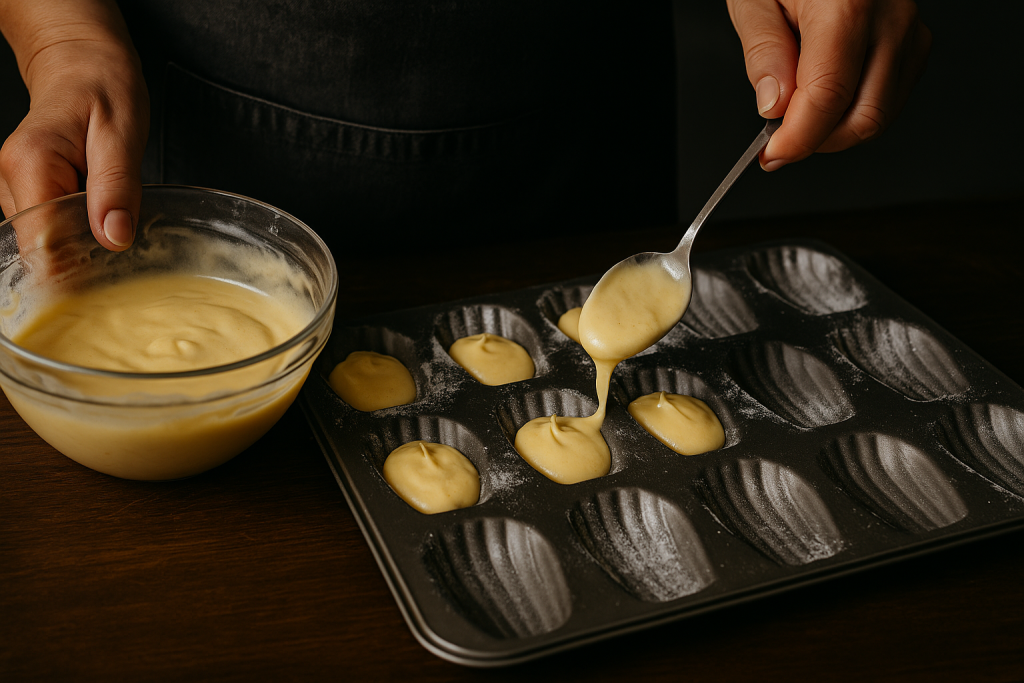
- Fill moulds to just below the rim. Too much batter kills the lines.
- Bake 8–10 minutes until golden at the ridges and springy in the centre. Turn out after 1–2 minutes. Dust when cool.
Common Mistakes – and Fast Fixes
Problem – Why – Fix
- No hump – warm batter, timid heat – chill batter, use a hot oven.
- Sticking – unprepared pan – butter and flour the moulds.
- Greasy crumb – butter too hot – cool it before folding.
- Blobby edges – overfilled tray – fill just under the rim.
Variations That Don’t Break the Structure
- Orange + vanilla – swap zest, add ¼ tsp vanilla.
- Almond-kissed – a drop of almond extract; keep it light.
- Gluten-free – use a reputable self-raising GF blend, chill a bit longer to help it set before spread.
- Chocolate dip – set half-dips on parchment. Looks fancy, costs nothing in effort.
Keep the ratios the same. Tinker with flavour, not the bones.
Timing, Storage, Serving
Madeleines peak fast – that’s their charm. Best within a day. After that, they’re still good, just less ethereal.
- Room temp: airtight tin, same day is ideal.
- Next days: brief 5-second microwave softens the crumb.
- Freeze: plain, up to 3 months. Thaw, then dust.
Serve with Earl Grey, lemon curd, or a white-chocolate drizzle if you must. I prefer them unadorned – a small cake that knows when to stop.
If Yours Still Sulk
Be blunt with the process. Weigh ingredients. Use room-temperature eggs. Don’t rush the fold. Chill the batter. Bake hot. Most flat, rubbery batches are heat and handling, not fate. The “hump mystique” isn’t mystique – it’s physics and patience. SeriousEats spells it out, and bakers hammer the same rule: cold batter, hot blast.
One Last Word On Source And Method
Mary’s “Baking Bible” rendition has been cooked and re-cooked for years, with consistent ingredient lists and pan prep across independent write-ups. That’s why it’s a safe base to learn the move – then make it yours.
Mike McShane Weight Loss – What Actually Happened?
Who Mike McShane Is
You know him – the quickfire American on the UK’s “Whose Line Is It Anyway?”, Friar Tuck in “Robin Hood: Prince of Thieves”, a familiar voice across film and TV. That public profile matters, because bodies change under a spotlight. McShane’s career spans improv, stage and screen, and he’s still working – most recently returning to the Edinburgh Fringe.

What We Can Verify About His Weight Loss
There’s a lot of chatter online. Let’s stick to what’s on record. In a 2006 Guardian interview, McShane said he’d had gastric bypass surgery “a few years ago”. The piece notes he looked very different from his earlier TV days. That’s clear, verifiable, and enough to cut through the rumour mill. Reports elsewhere place the operation in 2003 – reasonable, given the timeline.
Why Surgery Isn’t the Whole Story
Surgery changes the plumbing. It doesn’t write the menu. After any bariatric procedure, the day-to-day work still rules – food choices, movement, sleep, follow-up care. That’s not sexy, but it’s reality. If you were hoping for a magic door marked “Before → After”, you’ll be disappointed. Progress is messy – more accordion than straight line.
For McShane, the public trail shows a performer who kept grafting – theatre, voice work, TV – rather than parading a diet brand. That silence is telling. Many people who maintain weight loss stop turning it into content. They just live. Possibly that’s the best advert of all.
Separating Fact from Filler
Here’s the bit many won’t like: beyond that confirmed surgery, there aren’t trustworthy interviews listing kilos, meal plans or secret hacks. If a blog gives you exact weekly losses tied to McShane, be sceptical. Use the sniff test – is there a named source, date, outlet? If not, treat it as fan folklore.
So what can you reasonably take from his story? A few grounded points:
- It’s normal for creative workers to cycle through big lifestyle shifts between gigs and tours.
- Public recognition can push people to draw a line – surgery, rehab, coaching – then build new routines quietly.
- The best indicator you’ll see is sustained work and presence, not a number on a bathroom scale.
What Actually Helps with Weight Control
Let’s zoom out to what’s proven for the rest of us. The NHS offers a free 12-week plan that covers food, activity and tracking. It’s deliberately boring – which is why it works. Pair that with the UK guidelines: aim for 150 minutes a week of moderate activity, plus two strength sessions. Small, repeatable moves beat heroic sprints.
Practical levers you can pull:
- Simplify meals – protein, veg, whole-grain or potatoes, water. Then repeat.
- Walk daily – stack steps into your commute or lunch.
- Lift something twice a week – bodyweight is fine.
- Sleep like it’s a job – because it is.
No drama. Just repetition. If you want “McShane-level” change, you’ll need “McShane-level” consistency – the long run of shows, not the opening night.

Two Short Lists You Can Use
Red Flags To Ignore
- Miracle gadgets, celeb “detoxes”, or any plan that bans whole food groups without medical reason.
- Anonymous claims about someone else’s weight – without dates, quotes, or outlets.
- “One weird trick” language – it’s marketing, not medicine.
Green Flags To Copy
- A weekly routine you could keep during your busiest month.
- Food you’d still eat in six months.
- Movement you don’t dread.
- A progress log that tracks habits, not just the scale.
Bariatric Surgery – When, Why, How
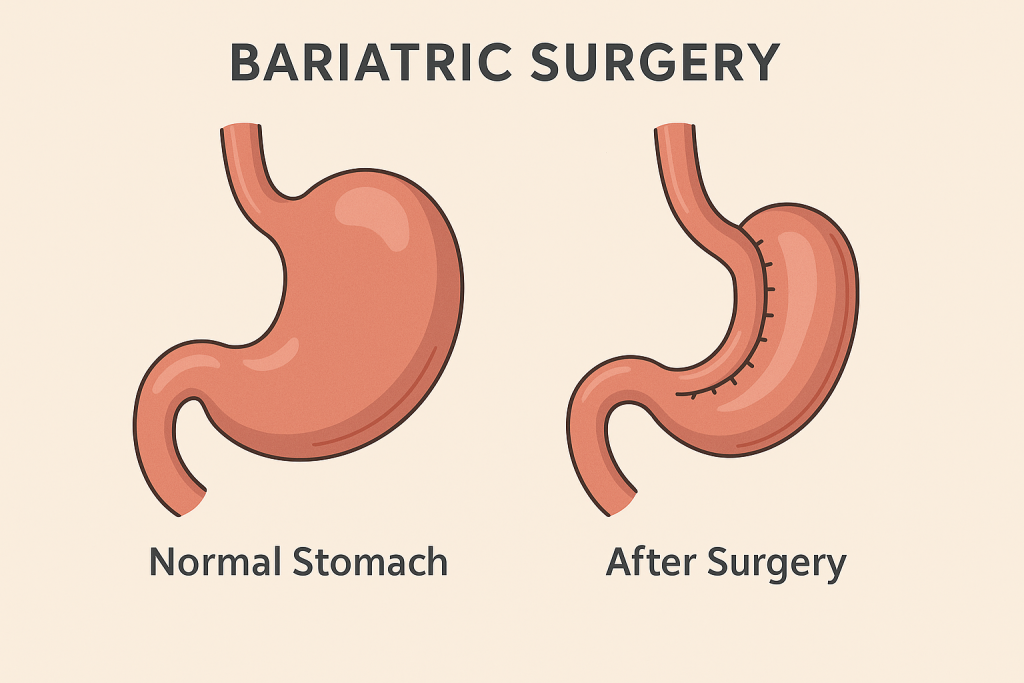
Gastric bypass isn’t a shortcut – it’s a clinical tool for specific cases. Eligibility and aftercare are determined by clinicians, not headlines. If you’re considering it, speak to your GP and get routed to an NHS bariatric pathway, where appropriate, or start with the 12-week plan while you gather information. Be blunt with yourself – surgery changes what and how you can eat. It doesn’t remove choice.
The Human Side of a Public Body
McShane has been famous long enough for audiences to “remember” a shape. That can be cruel. Bodies carry careers, grief, joy, and the cost of touring. He once joked that, post-surgery, Hollywood wasn’t sure where to put him. That’s how casting works – type first, nuance second. Honestly, it’s a neat metaphor for our own bias. We pigeonhole, then we notice the person years later.
My Take – Plain, Not Pretty
If you came for a crash-diet blueprint with Mike’s name on it, it isn’t there. What is there is an adult decision – surgery – followed by years of steady work and a quieter life around food. That’s not contradictory; it’s mature. If you want to copy anything, copy that posture: do the necessary thing, then move on.
If you’re starting today, keep it simple. Pick one habit you can nail this week – daily walks, a protein-first breakfast, or a fixed lights-out time. Hold it for four weeks. Then add the next. You’ll feel slow. Good. Slow lasts.
Michelle Ogundehin Weight Loss – What’s Real and What’s Useful
Why People Ask
Michelle Ogundehin is best known for design – editor, author, TV judge on Interior Design Masters. Lately, search suggests a different interest: her weight. You want a straight answer. Here it is – there’s no verified “big drop” story with dates and numbers. What is public is her long-standing focus on wellbeing, routine and a home that supports health. That’s the sensible headline, even if it’s less dramatic than a before–after reel.

What’s Verified – and What Isn’t
I can’t point you to an interview where Michelle lists kilos lost or a crash plan. It doesn’t exist in credible sources. What we do have: her writing on health-centred living, a book about the home as a foundation for wellbeing, and recent posts outlining simple “longevity” pillars. She has also talked about studying nutrition, which fits the picture of a methodical, lifestyle-first approach. Honestly, that’s more useful than a scale figure.
How She Talks about Health
Michelle ties everyday habits to how you feel in your space. She’s said your environment can help or hinder the basics – eating well, sleeping, moving. Tidy rooms won’t burn calories, but they do remove friction. Good design becomes a behaviour cue. That’s practical, not mystical.
In a 2020 interview she sketched her routine: aim for 30 minutes of exercise, 10,000 steps, stand up hourly, and 10 minutes of meditation. Weekdays vegetarian. Home-made meals. No caffeine. Devices off by 9.30pm. That’s not a fad. It’s structure. Possibly the most underrated tool in weight control.

The Pillars She Emphasises
On her Substack, Michelle frames longevity around five basics: nutrition, exercise, sleep, stress management and, where appropriate, supplements or prescribed medicines. Familiar? Yes. Effective? Also yes – when done consistently.
Distilled takeaways you can copy:
- Make the home remove friction – clear counters, set spaces for cooking and movement.
- Protect sleep and routine – screens down, same wake time, wind-down rituals.
- Move daily – short sessions add up; walking is still king.
- Eat with intent – mostly whole foods, regular meals, fewer liquid calories.
Does Any of This Mean “Weight Loss”?
It can. Not because of a magic trick, but because these habits make a calorie deficit livable. UK guidance is clear: steady loss comes from sustained energy balance, not single “superfoods”. The free NHS 12-week plan is a good scaffold if you want structure without noise. Pair it with the UK activity guidelines – 150 minutes a week of moderate work, plus two strength sessions. Keep the bar low enough that you can step over it daily.
If you want a starting checklist:
- Download the NHS plan and set a small weekly target.
- Hit 150 minutes across the week – brisk walks count.
- Lift twice – short, simple, full-body sessions.
- Track weekly averages, not daily swings. Water lies; trends don’t.
The Design Link That People Miss
Michelle’s core idea is that home is a health tool. A chaotic kitchen fights your meals. A dark bedroom fights your sleep. A cramped living space fights movement. In her book “Happy Inside”, the thread is constant – design your space to nudge better choices. That won’t replace nutrition. It will make nutrition plausible on a Wednesday when you’re tired. Possibly the only day that matters.
My Take – Blunt, but Fair
If you came for a headline number, you’ll leave empty-handed. There’s no credible record of a dramatic “Michelle Ogundehin weight loss” programme. What you do have is a public figure who models boring, durable habits. She treats the home as a tool, keeps movement regular, eats with intent, and protects sleep. Honest truth – that’s the playbook that works.
Will you see the scale slide doing the same? Maybe not at first. Bodies are noisy. But if your environment supports your plan and your plan is simple enough to repeat, change happens. It just won’t announce itself with fireworks.
If You Want to Borrow Her Approach
Here’s a minimal, keepable routine inspired by what Michelle shares – adapted to weight goals:
- Morning anchor – same wake time, light exposure, a short walk or stretch.
- Kitchen cue – clear worktop, plan one home-made meal today.
- Movement floor – 30 minutes activity or 8–10k steps; stand hourly.
- Evening wind-down – devices off by 9.30pm, prep tomorrow’s breakfast.
Final Word
Michelle Ogundehin’s public trail isn’t a weight-loss confession. It’s a blueprint for living on purpose. If you want change, build the scaffolding first – your space, your routine, your sleep. Then let the numbers follow. It’s slower than a headline and kinder than a sprint. And, honestly, it’s the only route most of us can live with.
Shilajit and Weight Loss – What the Evidence Really Says
Shilajit pops up everywhere now – reels, capsules, “detox” blends. Weight loss claims follow close behind. I’ll be direct. The science is thin. Traditional use is long. Modern data are short. If you’re here for honest guidance, let’s separate folklore from facts.

What Shilajit Actually Is
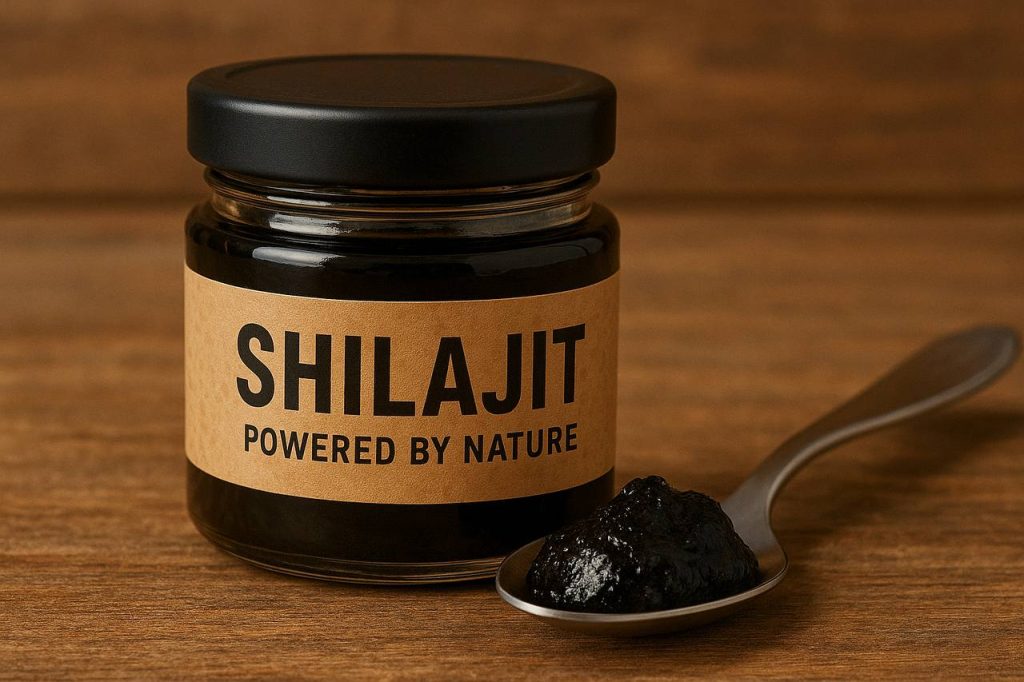
Shilajit is a tar-like substance that seeps from rock in mountain regions over centuries. It contains humic substances, minerals and, notably, fulvic acid. Ayurveda classed it as a rasayana. That’s the history. It doesn’t prove it trims your waist.
The Case for Weight Loss – Very Thin Ice
There is one oft-quoted clinical paper from an Ayurvedic journal. Sixty-six people with obesity took “shilajatu processed with Agnimantha”. Reported results: about 5 kg down and a drop in BMI after treatment. Sounds impressive. But it’s old, small, uses a combined preparation, and sits far from today’s trial standards. Replication is lacking. I wouldn’t build your plan on it.
Newer Research Isn’t a Silver Bullet
A recent randomised trial bundled chromium, Phyllanthus emblica and shilajit alongside diet and exercise for people with metabolic risk. Some health markers improved. But the design can’t tell us what shilajit did on its own – if anything. It’s a cocktail, inside a lifestyle programme. Useful context, not proof of fat loss from shilajit.
Performance or Hormones? Not Weight
A small sports-nutrition study found 8 weeks of branded shilajit helped people retain strength after fatiguing work. Interesting for training, but it didn’t show weight loss. You’ll also see talk of testosterone and fertility from tiny studies; again, not robust, and not weight. Honestly, this is where hype runs faster than data.
The Mechanism People Cite – Fulvic Acid
Advocates point to fulvic acid. In lab settings it shows antioxidant and other effects. Human evidence is limited and dosing is messy. Even the clinics saying “maybe” also say “we don’t know enough”. If fulvic acid has potential, that still doesn’t make shilajit a proven slimming aid. Possibly helpful for other things one day; not today’s weight-loss pill.
Safety: The Heaviest Part of the Story
This is the bit that matters. Quality varies. Contamination happens. Heavy metals have been found in some Ayurvedic products, and shilajit is not immune. A 2025 analysis detected thallium in raw shilajit and in commercial supplements – with some pills higher than the raw resin. Regulators in the US, Canada, Australia and UK public bodies have all warned about heavy-metal risks from unapproved Ayurvedic medicines. Bottom line – choose blindly and you’re gambling.
Possible side-effects reported with shilajit or related compounds include GI upset, dizziness, allergic reactions and, rarely, serious events. None of that screams “weight-loss shortcut”.
If You Still Want to Try It
I’m not your GP – but I can nudge you towards safer steps.
Before you buy:
- Speak to your clinician, especially if you’re pregnant, breastfeeding, have heart, liver, kidney or thyroid issues, take anticoagulants, or have iron overload.
- Pick products with independent testing and a recent COA (certificate of analysis). Look for credible third-party seals. Variability is huge.
If you use it:
- Treat it as an experiment. Start low. Track how you feel. Stop if anything feels off.
- Don’t stack shilajit with other “test boosters” or exotic blends. Stacking multiplies unknowns.
This is common sense, not fear-mongering.
What Actually Works for Weight Loss
No resin beats the basics. You need a calorie gap you can live with and habits you’ll repeat when life is messy.
Food moves that work:
- Anchor meals with protein; add fibre from veg, pulses, wholegrains.
- Cut liquid calories – alcohol, sugary drinks, creamy coffees.
- Plan simple meals. Consistency beats heroics.
Activity that sticks:
- Aim for 150 minutes moderate activity a week or 75 vigorous – plus two strength sessions. Walk more. Break up long sitting.
- Sleep like it matters – because it does. Poor sleep pushes appetite and water retention.

Read Claims With a Cold Eye
You’ll keep seeing promises. Some sound spiritual. Some sound scientific. Use a filter.
Red flags:
- “Melts fat”, “detoxifies belly”, “supercharges metabolism” – with no human trials.
- Vague “doctor-approved” lines with no names, journals or dates.
- Before–after photos with different lighting or angles.
Green checks:
- Named trials you can read.
- Clear methods and numbers.
- Acknowledgement of limits and side-effects.
If a claim dodges the green checks, it’s marketing.
My Take – Honestly
Could shilajit support energy or training in some contexts? Possibly. Could that make it easier to stick to a plan? Maybe. But calling it a weight-loss tool is a stretch right now. The human evidence is light, and safety depends on sourcing. If you want results, build the dull machine – steady calories, regular movement, enough sleep, repeated for months. Use supplements for marginal gains once the machine is running.
If you still fancy trying shilajit, do it with eyes open, a COA in hand, and your GP in the loop. Save the miracle talk for the adverts.
Vagifem and Weight Loss: Facts, Not Folklore
What Vagifem Is
Vagifem is low-dose vaginal oestrogen (estradiol) prescribed for urogenital symptoms such as dryness, irritation and pain. It is used locally, via a small tablet inserted into the vagina with an applicator, usually twice weekly after a short daily “loading” phase. It is designed for symptom relief – not for changing body weight.

Does Vagifem Affect Weight?
Short answer – there is no good evidence that Vagifem causes weight loss. Vaginal oestrogen delivers tiny amounts of hormone to the local tissues, with minimal systemic absorption at low doses. Because bloodstream levels remain low, effects on body weight are unlikely to be meaningful. That is why vaginal oestrogen generally does not require progestogen for endometrial protection.
You may still read anecdotes about “Vagifem weight loss” or “weight gain”. Be cautious. Weight often shifts around the menopause for many reasons that have little to do with HRT. UK guidance repeatedly notes there is little evidence that HRT per se makes you put on weight.
Why Weight Changes Around Menopause
Ageing reduces lean muscle mass. Resting energy use falls. Sleep can worsen. Appetite signals wobble. Oestrogen decline also nudges fat distribution toward the waist. The result is a slow, stubborn creep rather than a sudden leap. Reviews and patient-facing guidance reflect this broader picture and explain why many women report gain at midlife – with or without HRT.
What We Know about Absorption
Pharmacokinetic data show very low serum estradiol with low/ultralow-dose vaginal products. Some studies report a small early spike when treatment starts (as the vaginal lining is thin), then low levels thereafter. Practically, it means local benefit with minimal whole-body exposure – again, not a platform for fat loss.
Side Effects – Where “Weight” Shows up
Official leaflets and reputable summaries list common local effects: discharge, spotting, breast tenderness, abdominal cramps, bloating or irritation. Some references include fluid retention and weight change as possible, usually rare or not well quantified. If it happens, it is more likely water than fat. Report persistent swelling, rapid shifts, or anything that worries you.
Vagifem for Weight Loss? No
Let’s be blunt. Vagifem is not licensed for weight management. HRT can make life easier – better sleep, fewer urinary and vaginal symptoms – which might indirectly help your routine, training and appetite. But using a local oestrogen as a slimming aid makes no clinical sense and is not supported by evidence.
How to Judge Claims You See Online
Red flags:
- Promises that any HRT will “melt belly fat”.
- Before/after pictures with no dates or details.
- Stories that never cite a leaflet, NHS page, or peer-reviewed data.
Green checks:
- Named product information (SmPC or patient leaflet).
- NHS, British Menopause Society, or Women’s Health Concern guidance.
- Trials that measure serum estradiol with clear methods, not blogs.
Practical Ways to Manage Weight While Using Vagifem
If weight is the goal, use tools that actually move the needle. Keep it simple and keepable.
Food – small levers, big pay-offs:
- Anchor meals with protein; add veg you’ll actually eat.
- Watch liquid calories – alcohol, sugary drinks, milky coffees.
- Build a small, steady calorie deficit you could follow for months.
Activity – routine beats heroics:
- Aim for 150 minutes of moderate activity a week, plus two short strength sessions.
- Walk daily. Short walks after meals help.
- Guard sleep – poor sleep pushes appetite and water retention.
None of this is glamorous. It works. And it plays well with HRT because feeling better makes it easier to stick to the plan.
My Take – Honestly
Vagifem treats local menopausal symptoms. It does that job well for many women, with low systemic exposure. It does not burn fat. If your weight goes down while using it, it will be because of diet, activity, sleep, stress – the usual suspects. If your weight goes up, check for normal midlife trends, fluid shifts, and changes in eating or movement. Don’t pin it all on a low-dose vaginal tablet.
If in doubt, talk to your prescriber. You can adjust dose, switch formulations, or add practical support around food and activity. Treat medicines for what they are; use habits for the rest.
Bottom Line
Vagifem is for vaginal and urinary symptoms – not for weight loss. Low-dose vaginal oestrogen is absorbed systemically at very low levels, so weight effects are unlikely and not an intended outcome. Menopause-related weight change is real, but the answer lives in behaviour, sleep and strength – with HRT helping comfort, not the scales. If anything about your weight or side-effects feels off, get individual advice rather than relying on internet folklore.